English
 繁体中文
繁体中文 简体中文
简体中文 Deutsch

Is Baby Diaper Machine Business Profitable? How to Start & What Is the Profit Margin?
Baby Diaper Machine investment is becoming one of the most attractive opportunities in the global hygiene product industry. With increasing birth rates in developing markets, rising hygiene awareness, and the rapid expansion of private-label diaper brands, baby diaper manufacturing has transformed into a scalable and high-demand business model.
But investors and entrepreneurs often ask:
Is baby diaper manufacturing profitable?
What is the real profit margin?
How much investment is required?
What raw materials are needed?
How do I start a diaper factory step by step?
This comprehensive guide answers all these questions from a B2B and investment perspective, while explaining how choosing the right fully automatic baby diaper machine can determine your long-term profitability.
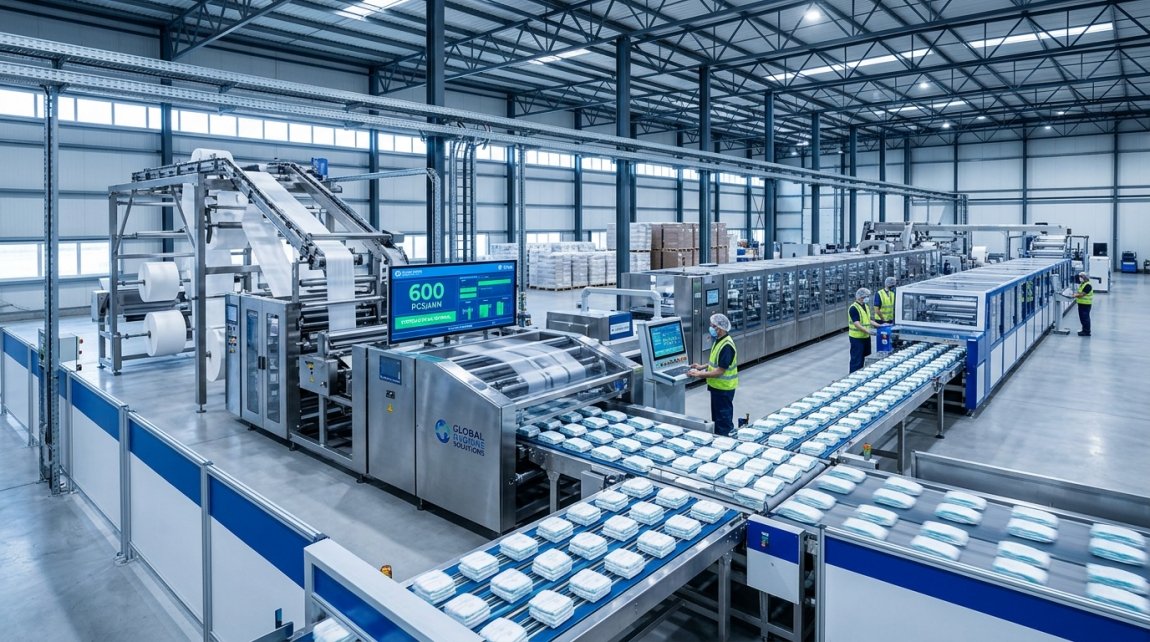
Is baby diaper manufacturing business profitable?
Yes, baby diaper manufacturing can be highly profitable when operated with a fully automatic baby diaper machine, optimized raw material sourcing, and efficient production management.
Why the Baby Diaper Market Is Profitable
High Consumption Frequency
Babies use 4–8 diapers per day. This creates consistent recurring demand.Growing Emerging Markets
Regions in Asia, Africa, the Middle East, and South America are experiencing strong diaper market growth.Private Label Opportunities
Supermarkets and distributors increasingly launch their own diaper brands.Scalability
A single baby diaper production line can produce hundreds of thousands of pieces per day.Stable Raw Material Supply Chain
Materials like SAP, fluff pulp, and non-woven fabric are globally available.
Revenue Potential Example
Let’s assume:
Machine speed: 600 pcs/min
Working hours: 16 hours/day
OEE: 85%
Daily production:
600 × 60 × 16 × 0.85 = 489,600 diapers/day
If average wholesale price = $0.08 per diaper:
489,600 × $0.08 = $39,168 daily revenue
Monthly (26 working days):
$39,168 × 26 = $1,018,368 monthly revenue
This shows why investors consider baby diaper manufacturing a scalable industrial business rather than a small workshop operation.
What is the profit margin in baby diaper manufacturing?
The average profit margin in baby diaper manufacturing typically ranges between 15% and 35%, depending on scale, automation level, and raw material sourcing.
Key Factors Affecting Profit Margin
Machine automation level
Raw material cost
Labor cost
Brand positioning
Packaging and distribution strategy
Cost Structure Breakdown (Example)
Raw Materials (SAP, pulp, non-woven) | 60–70% |
Labor | 5–10% |
Electricity | 3–5% |
Packaging | 5–8% |
Depreciation (Baby Diaper Machine) | 5–8% |
Overhead & Logistics | 5–10% |
Raw materials account for the majority of production cost, making supplier selection extremely important.
Example Profit Margin Calculation
Assume:
Production cost per diaper: $0.06
Wholesale price: $0.08
Profit per diaper: $0.02
Profit margin:
(0.02 ÷ 0.08) × 100 = 25% gross margin
With large-scale production, operational efficiency increases, potentially raising margins closer to 30%.
How to start a baby diaper manufacturing business?
Starting a baby diaper manufacturing business requires proper planning, machinery selection, and market positioning. Below is a step-by-step guide designed for investors and factory owners.
Step 1: Market Research & Positioning
Identify your target region
Study competitors
Determine price segment (economy, mid-range, premium)
Estimate monthly demand
Step 2: Business Plan & Financial Planning
Prepare:
Investment budget
Expected ROI timeline (typically 2–3 years)
Capacity planning
Sales channel strategy
Step 3: Choose the Right Baby Diaper Machine
This is the most critical decision.
You can choose between:
Semi-automatic diaper machine
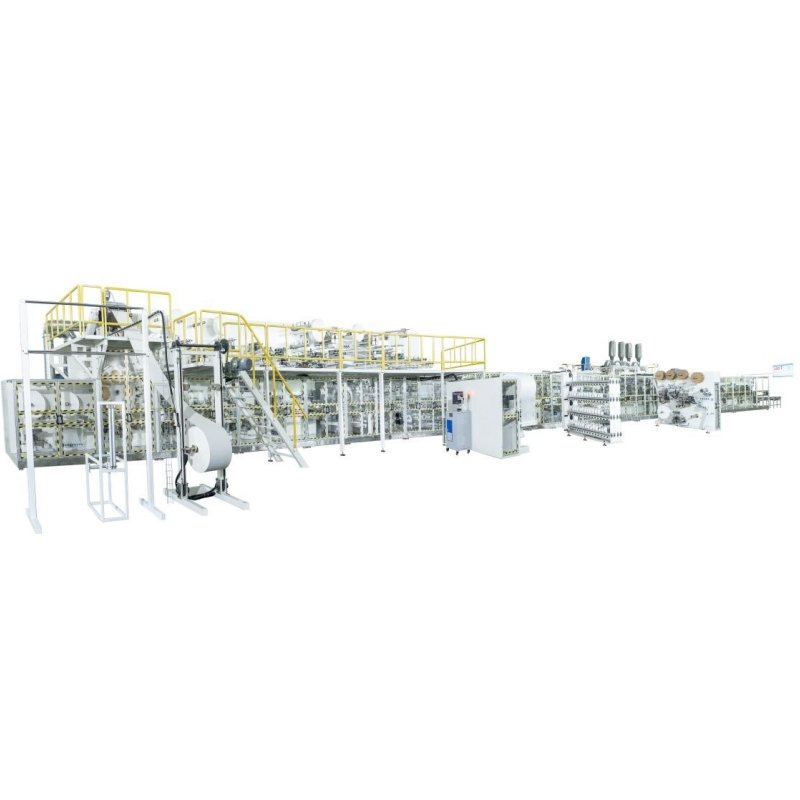
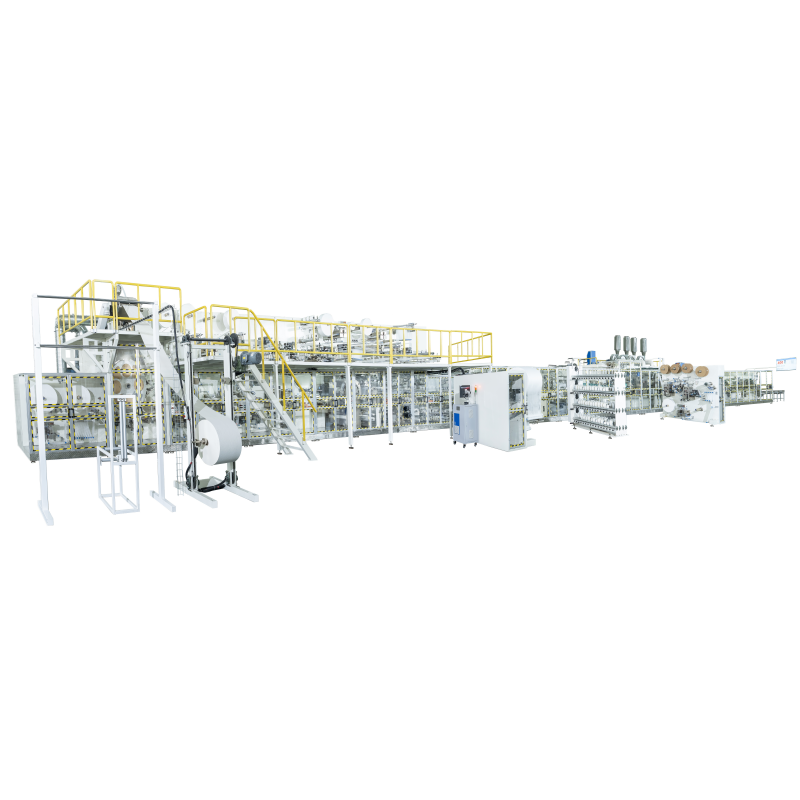
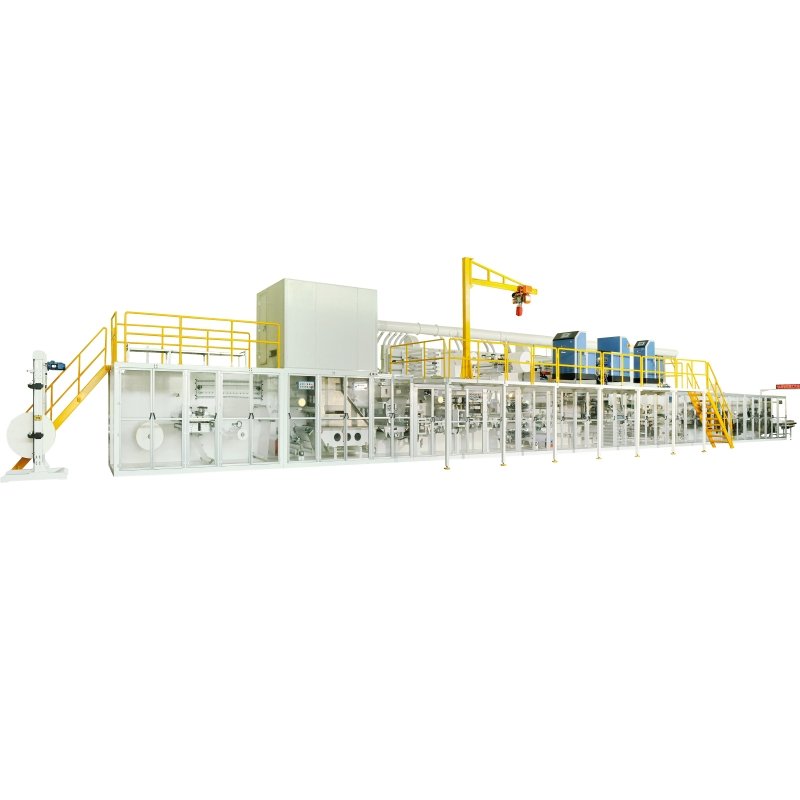
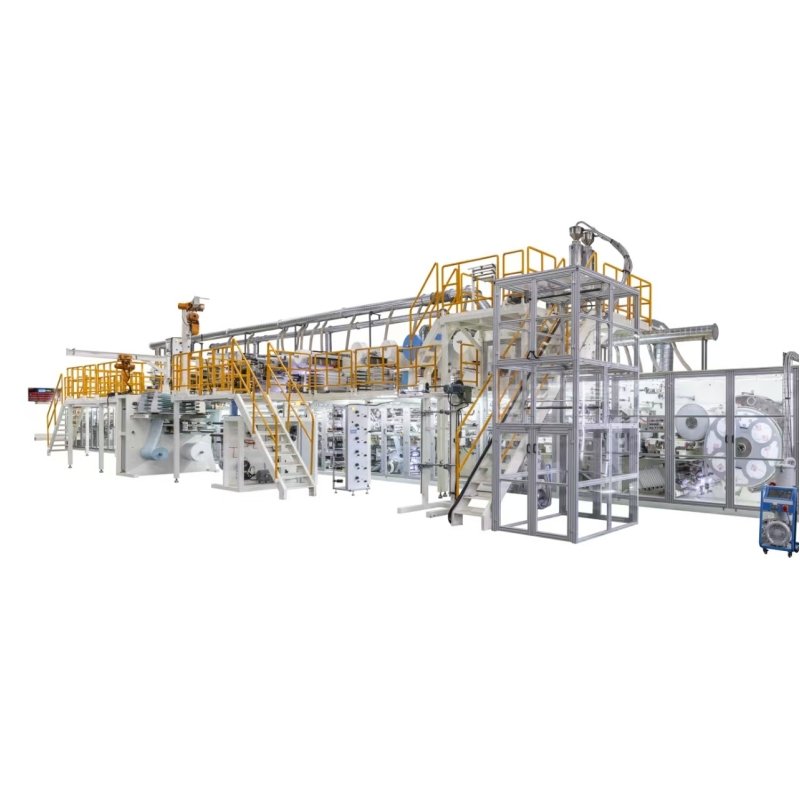
Fully automatic baby diaper machine
Industry trend strongly favors fully automatic systems due to:
High speed (400–1,200 pcs/min)
Lower labor dependency
Stable product quality
Higher hygiene standards
Step 4: Factory Space Planning
A standard single-line diaper manufacturing plant requires:
Machine workshop: 400–600 sqm
Raw material storage: 800–1,000 sqm
Finished goods warehouse: 1,000+ sqm
Utilities & office: 200–300 sqm
Total recommended factory space: 2,500–3,000 square meters
Step 5: Raw Material Sourcing
Establish reliable supply chains for:
Fluff pulp
SAP
Non-woven fabric
PE film
Hot melt adhesive
Stable quality materials directly impact product reputation.
Step 6: Installation & Commissioning
Professional diaper machine manufacturers provide:
On-site installation
Technical training
Trial production support
Production optimization
Step 7: Brand & Distribution Setup
Sales channels may include:
Supermarkets
Local distributors
E-commerce platforms
OEM for global brands
What are the raw materials required for baby diapers?
Understanding raw materials is critical for cost control and quality consistency.
Fluff Pulp | Core absorption base |
Super Absorbent Polymer (SAP) | High liquid absorption |
Non-woven Fabric | Topsheet (skin contact layer) |
PE Film | Waterproof backsheet |
Spandex Elastic | Leg cuffs & waistband |
Hot Melt Adhesive | Bonding layers |
Release Paper | Tape protection |
Fluff Pulp
Derived from wood pulp. Forms absorbent core structure. Major cost component.
SAP (Super Absorbent Polymer)
Absorbs liquid multiple times its weight. Determines dryness performance.
Non-Woven Fabric
Soft layer contacting baby skin. Requires breathability and comfort.
PE Film
Prevents leakage and may include breathable technology.
Raw Material Cost Optimization Tips
Bulk purchasing contracts
Supplier diversification
Local vs imported comparison
Quality consistency testing
Why Choosing the Right Baby Diaper Machine Matters for Profitability
The performance of your Baby Diaper Machine directly determines:
Production capacity
Defect rate
Labor requirement
Power consumption
Long-term maintenance cost
Fully Automatic vs Semi-Automatic Comparison
Speed | 400–1,200+ pcs/min | 100–200 pcs/min |
Labor | 2–3 operators | 5–10 operators |
Quality Stability | Excellent | Moderate |
Auto-Splicing | Yes | No |
Hygiene Level | High | Medium |
ROI Speed | Faster | Slower |
About EZIO‑MACHINERY – Professional Baby Diaper Machine Manufacturer
EZIO‑MACHINERY is a professional manufacturer specializing in hygiene product production lines, including:
Baby diaper production line
Adult diaper production line
Underpad production line
Sanitary napkin production line
Located in Quanzhou, Fujian, China, we have over 15 years of manufacturing experience in the hygiene machinery industry.
As a source factory, we provide:
Direct pricing without intermediaries
Customizable production lines
Stable quality control
Competitive cost performance
CE-certified machines
Our engineering team focuses on high-speed, automatic, and stable baby diaper machines designed for global B2B customers.
Frequently Asked Questions (FAQs)
Is baby diaper manufacturing business profitable for small investors?
Yes, but scale matters. Semi-automatic machines may suit small local markets, while fully automatic systems provide better long-term ROI.
How much does a baby diaper machine cost?
Cost depends on speed, automation level, and customization. Fully automatic lines require higher capital investment but generate higher output and faster ROI.
How long does it take to break even?
Most diaper manufacturing plants achieve ROI within 2–3 years depending on sales volume and market demand.
Can one baby diaper machine produce multiple sizes?
Yes. Machines can produce S, M, L, XL, and XXL by changing die cutters and adjusting PLC settings.
How many workers are needed?
Fully automatic lines typically require only 2–3 operators per shift.
Final Conclusion: Is Investing in a Baby Diaper Machine Worth It?
Yes — when properly planned.
Baby diaper manufacturing offers:
Stable recurring demand
Scalable production
15–35% profit margins
High automation opportunities
Global market expansion potential
Choosing a reliable and customizable Baby Diaper Machine is the foundation of long-term profitability.
Ready to Start Your Baby Diaper Manufacturing Business?
If you are planning to invest in a Baby Diaper Machine or build a complete diaper manufacturing plant, our engineering team is ready to assist you.
Customized machine quotation
Factory layout planning
Production capacity analysis
ROI calculation support
Global project experience
Contact EZIO‑MACHINERY today to receive a professional proposal tailored to your market.
Start building your profitable diaper manufacturing business now.