Deutsch
 English
 繁体中文
繁体中文 简体中文
简体中文

The Ultimate Guide to Baby Diaper Machines: Working Principle, Capacity, and Plant Setup
Baby Diaper Machine technology has become the foundation of the global hygiene manufacturing industry. As the worldwide baby diaper market continues to expand—driven by population growth, urbanization, and rising hygiene standards—investors and manufacturers are actively seeking efficient, fully automatic solutions to build competitive diaper manufacturing plants.
However, choosing the right baby diaper machine is not a simple task. Understanding working principles, production capacity, factory layout, and automation levels is essential before making a capital investment.
This comprehensive guide explains:
How a baby diaper machine works (step-by-step process)
The difference between semi-automatic and fully automatic diaper machines
Actual baby diaper production capacity calculations
How much factory space is required
Key FAQs for B2B buyers and plant managers
If you are planning to establish or upgrade a diaper manufacturing plant, this guide will provide the clarity you need.
How Does a Baby Diaper Machine Work? (Step-by-Step Process)
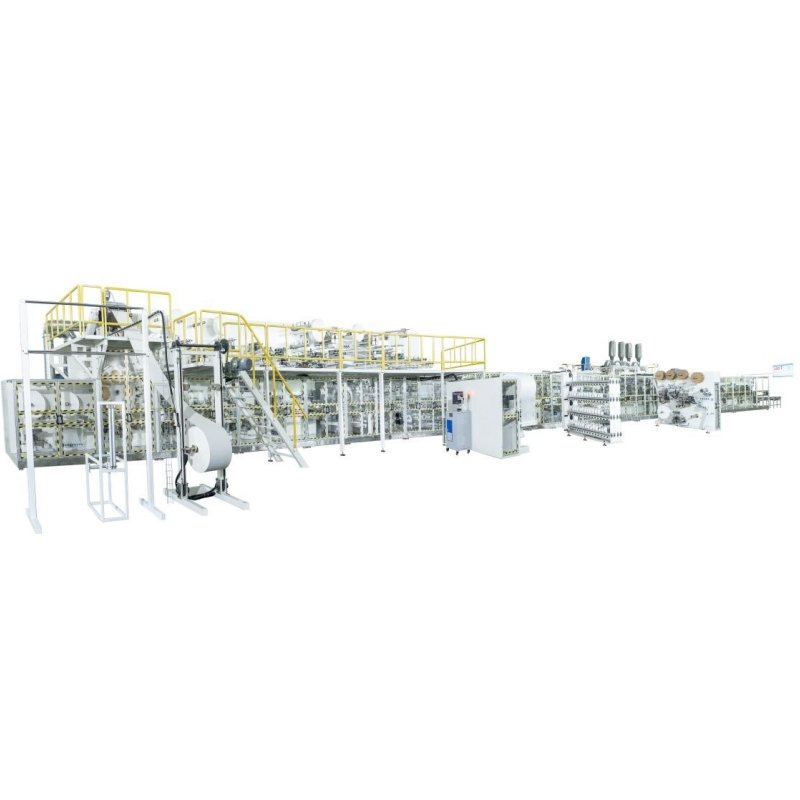
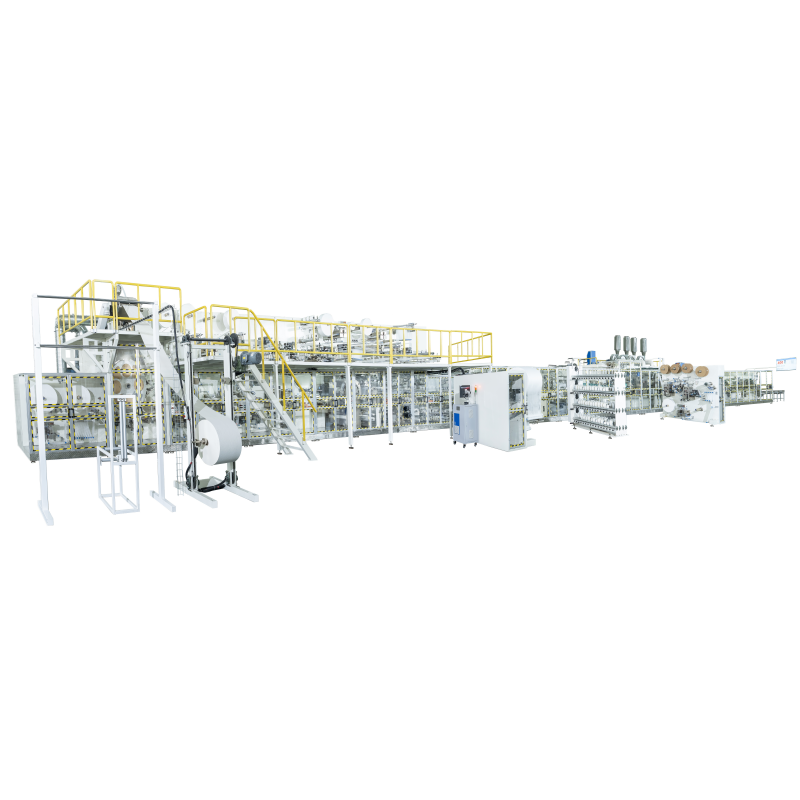
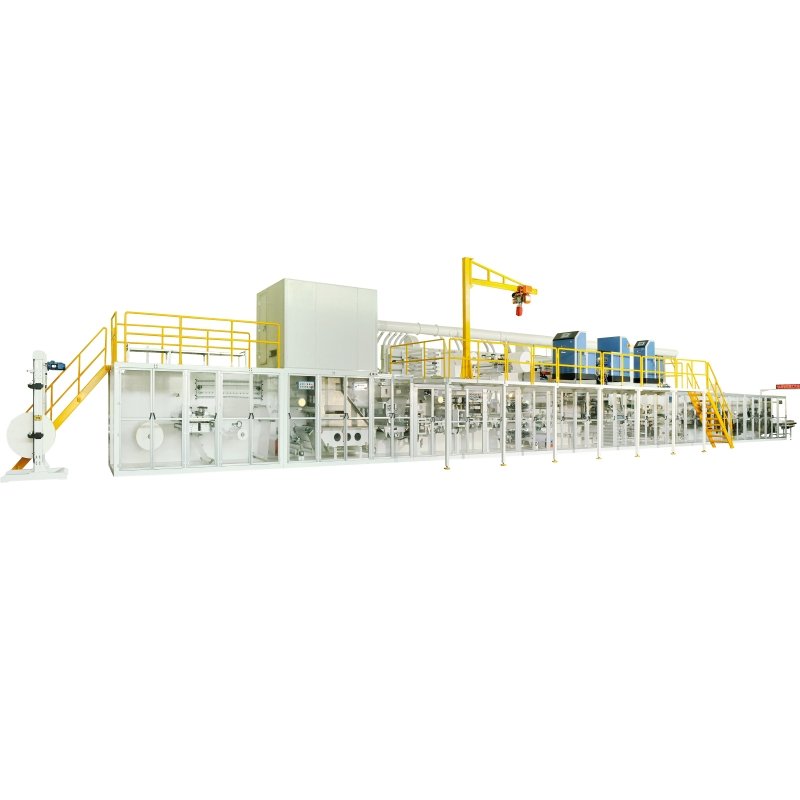
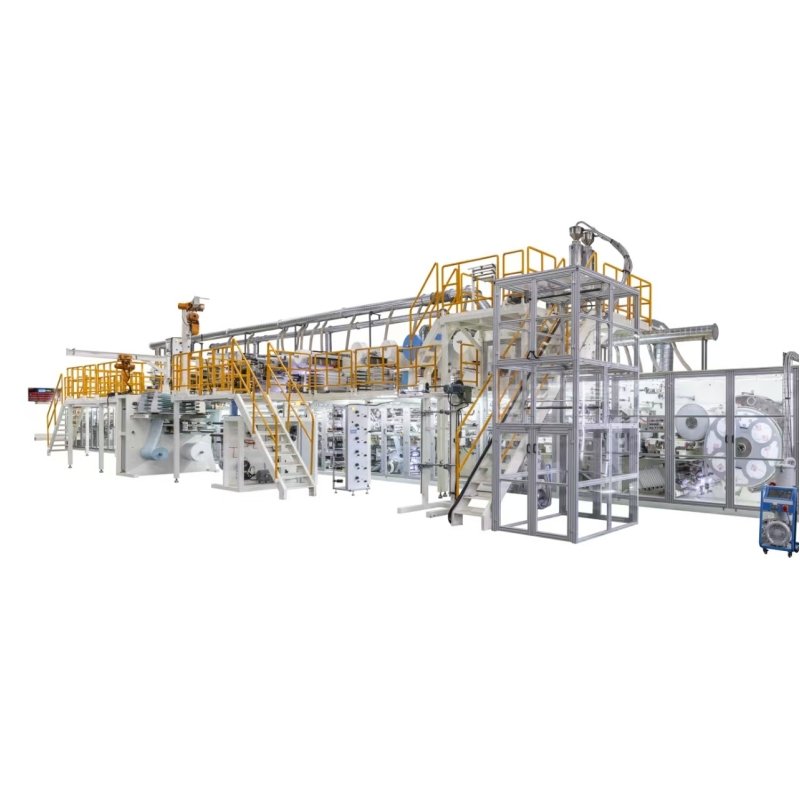
A modern fully automatic baby diaper machine is a continuous high-speed production system integrating multiple raw materials into a finished product within seconds. The machine operates through synchronized servo motors, PLC control systems, and automated tension monitoring to ensure precision and stability.
The process can be divided into three main phases:
Phase 1: Core Formation (The Absorbent Engine)
The absorbent core is the most important part of a diaper. It determines liquid absorption, dryness, and product quality.
Fluff Pulp Crushing
Wood pulp sheets are fed into a hammer mill where they are crushed into fine fluff fibers. This material forms the base of the absorbent core.
SAP Mixing
Super Absorbent Polymer (SAP) is precisely dosed and mixed with fluff pulp. SAP can absorb many times its own weight in liquid, significantly improving diaper performance.
Core Forming & Embossing
The fluff-SAP mixture is shaped using a drum forming system. The core is then wrapped with tissue or non-woven material and embossed for structural integrity.
Phase 2: Material Unwinding and Lamination
Multiple jumbo rolls are unwound simultaneously under computerized tension control.
Backsheet & Topsheet Application
PE film (waterproof backsheet)
Hydrophilic non-woven fabric (topsheet)
These materials are laminated together with the absorbent core using hot-melt adhesive systems.
Elastic Attachment
Spandex yarns are applied for leg cuffs and waistbands to prevent leakage. Servo-driven placement ensures precise positioning.
Phase 3: Assembly and Cutting
Frontal Tape & Side Tape Application
Fastening systems are automatically attached using precision glue applicators.
Final Die Cutting
A rotary die cutter shapes the continuous web into individual diapers (I-shape or T-shape designs).
Folding & Quality Control
Finished diapers are tri-folded automatically. Vision inspection systems detect defects such as:
Missing SAP
Misaligned tapes
Core displacement
Cutting defects
Defective units are automatically rejected, ensuring a qualified rate of ≥97%.
Semi-Automatic vs. Fully Automatic Diaper Machines: Which is Right for You?
Understanding the difference between a semi-automatic diaper machine and a fully automatic baby diaper machine is critical for investment decisions.
Semi-Automatic Baby Diaper Machines
Advantages:
Lower initial investment
Suitable for very small-scale production
Entry-level option for startups
Disadvantages:
Requires 5–10 operators
Machine must stop for material changes
Lower production speed
Higher contamination risk
Inconsistent quality
Fully Automatic Baby Diaper Machines
Advantages:
High speed (400–1,200+ pcs/min)
Auto-splicing without stopping
Zero human contact during production
Stable computerized tension control
Integrated automatic packing
Higher hygiene standards
Disadvantages:
Higher capital expenditure
Requires trained technicians
Comparison Matrix (SEO Featured Snippet Table)
Production Speed | High (400 - 1000+ pcs/min) | Low (100 - 200 pcs/min) |
Labor Required | 2-3 operators | 5-10 operators |
Product Consistency | Excellent | Moderate to Low |
Auto-Splicing | Yes | No |
Initial Investment | High | Low |
The industry trend is clearly moving toward fully automatic systems due to rising labor costs and hygiene standards.
What is the Production Capacity of a Fully Automatic Baby Diaper Machine?
Baby diaper production capacity depends on machine configuration, servo system quality, and OEE (Overall Equipment Effectiveness).
Design Speed vs Stable Production Speed
Design Speed: Maximum mechanical limit under ideal conditions.
Stable Speed: Real operating speed during continuous production.
Capacity Tiers
Entry-Level Automatic: 400–500 pcs/min
Ideal for regional brands.
Mid-Range Automatic: 600–800 pcs/min
Most popular configuration for standard diaper manufacturing plants.
High-End Servo-Driven: 1,000–1,200+ pcs/min
Used by global brands requiring extreme precision.
Real-World Daily Output Calculation
Example:
If a machine runs at 600 pcs/min, operating for 16 hours with an OEE of 85%:
600 × 60 × 16 × 0.85 = 489,600 diapers per day
Monthly production (26 working days):
489,600 × 26 = 12,729,600 diapers
This demonstrates why fully automatic baby diaper machines are highly profitable for large-scale manufacturing.
Plant Setup: How Much Space is Required for a Baby Diaper Manufacturing Plant?
Many buyers underestimate space requirements. The machine footprint alone is not sufficient for efficient operation.
1. The Machine Workshop
Typical dimensions:
Length: 30–40 meters
Width: 8 meters
Height: 4 meters
Required space including walkways: 400–600 sqm
2. Raw Material Storage
Materials include:
Fluff pulp
Non-woven fabric
SAP
PE film
Hot melt glue
Recommended space: 800–1,000 sqm
3. Finished Goods Warehouse
Compressed diapers still require large storage areas.
Recommended: 1,000+ sqm
4. Utilities & Office
Air compressors
Dust collection systems
QC laboratory
Staff facilities
Recommended: 200–300 sqm
Final Space Requirement
For a standard single-line fully automatic baby diaper manufacturing plant:
2,500 – 3,000 square meters (27,000 – 32,000 sq ft)
About EZIO‑MACHINERY – Professional Baby Diaper Machine Manufacturer
EZIO‑MACHINERY is a professional manufacturer specializing in hygiene product production lines. Located in Quanzhou, Fujian, China, we have over 15 years of experience in designing and producing high-precision machinery.
We specialize in:
Baby diaper production line
Adult diaper production line
Underpad production line
Sanitary napkin production line
As a source factory, we provide:
Direct pricing without intermediaries
Flexible customization
Stable quality control
Global project delivery experience
Our machines are designed for automatic, high-speed, and stable operation, and can be customized according to factory layout and regional power standards.
Frequently Asked Questions (FAQs)
How many workers are needed to operate a fully automatic baby diaper machine?
Typically 2–3 operators per shift are sufficient.
Can one machine produce different sizes of baby diapers?
Yes. Machines can produce S, M, L, XL, XXL sizes by changing die cutters and adjusting PLC settings.
What is the power consumption of a diaper manufacturing machine?
Generally between 250KW to 400KW depending on configuration.
What is the qualified rate of a fully automatic baby diaper machine?
High-quality systems achieve ≥97% qualified rate.
Conclusion & Next Steps
Investing in a Baby Diaper Machine is a strategic decision that can generate long-term stable returns. A fully automatic baby diaper machine ensures:
High production capacity (up to 800+ pcs/min)
Stable product quality
Lower labor cost
Higher hygiene standards
With proper plant space (approx. 3,000 sqm) and professional technical support, your diaper manufacturing plant can operate efficiently and competitively.
Ready to Start Your Diaper Manufacturing Business?
Contact EZIO‑MACHINERY today for:
Customized machine quotation
Factory layout design
Production capacity planning
ROI analysis for your local market
Our engineering team will help you build a reliable, high-performance baby diaper manufacturing plant tailored to your business goals.
Send us your inquiry today and receive a professional proposal within 24 hours.